I cannot get over how absolutely and unequivocally satisfying it is to watch every absolutely horrible call by umpires in the MLB be challenged by players. I cackle and pump my fist watching these horrible, Angel Hernandez-esque umpires (namely CB Bucknor) being held accountable by this new, life changing, world healing technology. The ABS system has been a long time coming. And I could not be happier that we have arrived to this point in time in the sport.
For decades, umpires in the MLB have not been held accountable in the slightest for making awful, game altering, season ending calls. Most of these calls actually occur in the field more than from behind the plate. But this advancement is definitely a start to giving some power back to the players and coaches rather than leaving games in the hands of umps with undiagnosed cataracts.
This new system labeled ABS (Automated Ball-Strike System) is intended to verify the integrity of calls that umpires make with their own judgement. The system allows players to challenge balls and strikes. Each team starts with two challenges. In extra innings, teams receive on additional challenge. “Hawk eye” cameras are used to monitor pitches and determine where they reside in the batters zone. Each batter zone is personalized based on player dimensions. The top and bottom of the strike zone are divvied by percentage of the players height. While the width of the strike zone will remain standard. Any long armed big guys in the league will have a slight advantage it would seem. Players are measured standing straight up. So inversely, fellas with a crouched batting stance will have a strike zone marginally larger than their stance’s zone.
The system did have its faults however. The fault however, were not missed calls but how the plate is visualized by the system. In a 3 dimensional strike zone, the system over performed. Leading to excessive strike outs. They then tested a 2 dimensional strike zone. Again, this over performed and called excessive strikeouts. But not as bad as the 3D version. Thanks to this marginal improvement, the MLB decided to run with the 2D version for this season. I’m sure this will improve as time goes on.
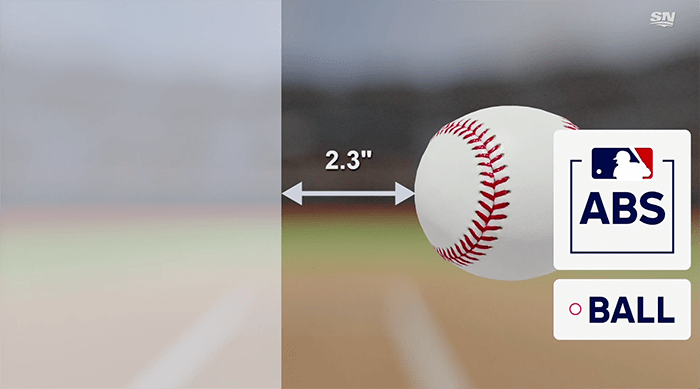
The system is so precise and finite that it can measure how far a ball is off the plate down to a fractions of an inch. All this to say: the system performs far better than our very own, proverbially blindfolded umpires.
The improvement has led to multiple call reversals. Almost always turning a strike into a ball. Just yesterday there was a game in which two at-bat/inning ending calls were reversed. Can you put on your thinking cap and just take a wild guess as to which umpire missed back to back calls? That’s right! Our very own CB Bucknor! He missed two back to back calls. Both pitches were an inch or so off the plate. A keen eye though will notice that just before that sequence of pitches, CB missed a call that was SIX WHOLE INCHES BELOW THE STRIKE ZONE!
He is the new Angel Hernandez. and just as quickly as he has taken Angel’s role, he may very well be losing it as he battles the Robo-umpire. It is quite the scene watching him increasingly become frustrated with how many challenges he is receiving. It’s even more comical when you see just how much the ball misses the plate. All you used to be able to do was shake your head, curse, and move on when an umpire calls a strike that is 6 inches off the plate. Now that the power has been given back to the players, it feels as though the glorious revolution is upon us.
This whole addition of ABS puts the need for an umpire into obscurity. What do we need em for when they just end up turning the tides of games with bad calls and bad judgement and we now have a system that does not make those mistakes? I may sound like a corporatist AI loving fool, but after years of watching horrid calls go unpunished, umpires abusing their power from behind the plate, games being lost or won on the eyes of the old guy under the dish— I think I can support this mentality when it comes to baseball.
The addition of ABS has led to another interesting change: fewer players exploding in anger at awful missed calls, and coaches no longer crashing out at the evidence is there on the jumbo-tron, burning into their corneas. How are you gonna argue with a system that is that precise in its calls??
I thought a coach couldn’t lose his mind over the system that calls balls and strikes. But sure as shootin, we had that happen too. Twins manager Derek Shelton was recently ejected after an ABS call. But it is not for the reason you think.
As funny as it would be to see him shout at the clouds as he argues with the machine about the call. That isn’t exactly what went down. Shelton bolted out of the dugout after a ball was overturned to a strike when the Orioles pitcher challenged a called ball by home plate umpire Chris Segal.
Shelton was furious about the fact the pitch could be reviewed at all. Shelton’s claim was that the pitcher did not indicate quick enough that he wished to challenge the pitch after the ball was called. The pitcher has up to three seconds to signal he wishes to challenge the play. On replay, Orioles closer Ryan Helsley signaled for a challenge within 2 seconds of the pitch being called. Of course after review the call remained standing and Shelton was promptly ejected for his outburst. I truly did not think I would see an ejection due to the use of ABS.
Overall, I think the addition of ABS is a win for baseball players and fans, but a nightmare for the umpires of the MLB. I hope this is a permanent change.
Happy Tuesday!

 The Takeaway
Leave a comment